Dewey Redman - Griot
Dewey could play the keys off the saxophone. Dewey's creativity was one of the highest forms of spirituality I ever experienced. - ORNETTE COLEMAN

Dewey was the most humble genius you could meet. The first time I heard Dewey Redman live was with Gerry Allen, Eddie Moore, and Lloyd Swanton at the Tankerville Arms in Melbourne in 1988. There was a tense expectation in the air before the band started. Something heavy was about to go down, and everyone knew it. As they were about to start, Lloyd bent down to pick up his bass, and "a stage light dazzled me and blinded me to the fact that the corner of the piano lid was sticking out. To anyone watching, it must have looked like I was quietly setting up my gear and then decided, without warning, to smash my head down onto the corner of the piano lid as hard as I could. I'd pay to see that. Anyway, it certainly cured my stage fright, and I think it helped a lot in coping with the heavy company."
Lloyd proceeded to play an incredible set of the most wild and creatively free music while blood dripped from his head. Here he was with some icons of improvised music, while the blood of initiation poured down his forehead. I always thought that Lloyd was elevated musically after this blood-letting, cleverly disguised as a simple mistake.
Then in the early 90s I got my own chance. I was living between New York and Bondi and was offered a tour of Australia with Dewey.
At our first meeting, Dewey was kind and funny, and made us all feel right at home. His music may have been intense, but his vibe was light and welcoming; he embodied love and music. When he made sound , it was a powerful moment, always. It was such an honor to experience his sound on the bandstand and to then actually play alongside him. He’d play these simple, what I call anciently familiar melodies, and his ideas were unending, and true, like a fountain.
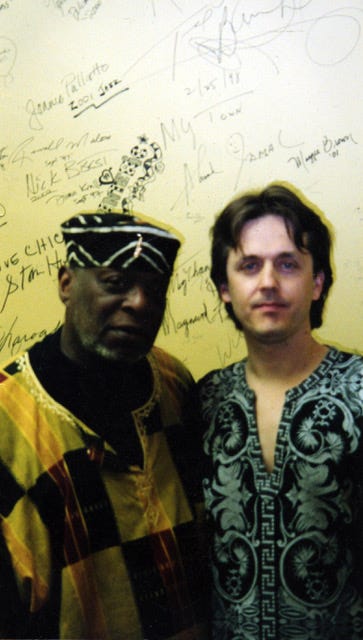
“Music is the biggest mystery,” he would say. “Barney, when you work out what music’s all about, CALL ME COLLECT!”
He brought things out in us that we didn’t know were there. When someone in the band would musically reach, he would make certain sounds and utterances of approval from the side of the stage—sounds of recognition or joy at what we were doing. “Yeah” … “Ah ha” … “Well” … It felt ritualistic and communal, and later, when I played in church, I heard similar utterances from the congregation or the minister when moments were bright.
I wrote down things he said to me on and off the bandstand, and they continue to inspire me. “We’re gonna dig a little deeper next time, and digging deep is the only way to get to the best of what music lives inside you.” Or one time, while I was soloing, he came up and whispered in my ear, “Stretch out, Barney, you’re not here for the money.”
When we played the Basement in Sydney, I bumped into actress Dianne Wiest in the audience. I said, “You look familiar. Do I know you?” not registering that she was a famous actress I had seen in various movies. She said jokingly, “I doubt it, man. I don’t hang out in your kind of circles.”
In 1997, after moving to New York for good, Dewey called me again out of the blue, inviting me to join his quartet with drummer Matt Wilson and bassist John Menagon. I have no idea how he even found me, but I wasn’t complaining.
We played various gigs, my first being at the Vision Festival in Lower Manhattan, a great grassroots free jazz festival where we got to really stretch out, playing free, bluesy, or post-bop. Dewey played musette on some tunes as well, which was some cosmic, freaky stuff. He told me that in the early days, women in the audience would fall for him if he deliberately pointed the bell of the musette between their legs and played long, resonating notes. Then he joked, “I might be old, but I ain’t cold!”
Dewey had a gruff voice and mumbled a lot, so you had to listen closely. He had a mystical air about him and a strong aura of awareness and love. He was skilled at pretending he wasn’t paying attention, but when you least expected it, he’d reiterate something you thought no one had noticed. Quick as a whip, he was always present, wearing a shade of ambiguity—maybe to ward off evil.
I recall rehearsing at his Brooklyn apartment on Martense St., where he had lived since the ‘70s. His wife, Lidija, answered the door, and then Dewey appeared in full African regalia—bright colors, an African cap—and the smell of incense warmed the atmosphere. Posters from his past were glued to the walls like wallpaper. He brought out a tiny Casio keyboard and some charts, and we began running through his music. I had just learned a Bud Powell lick and strategically weaved it into one of my solos during rehearsal. Dewey immediately let out a sound, like he knew I had been working on it. It felt almost psychic—that’s how he was.
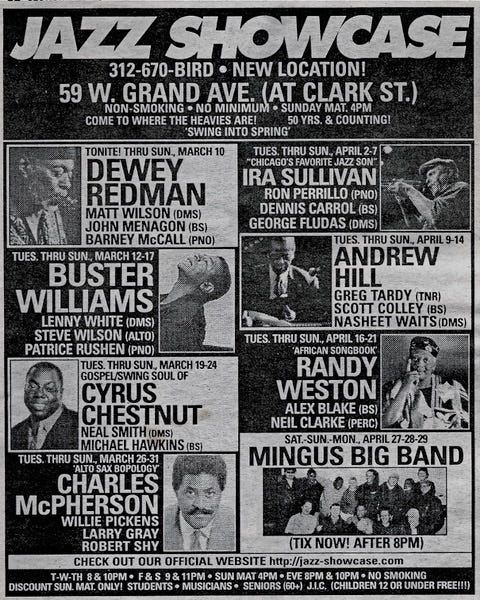
We played a week in Chicago at the Jazz Showcase. At JFK, Dewey skipped over to the bar and ordered a 10 a.m. double cognac. He wasn’t looking after himself. The gigs went great, but I caught the flu halfway through the week. Dewey checked in on me throughout the day, asked if I needed anything, and was always caring—he looked after his band.
When he said goodbye to musicians, he would always say, “Thank you for your music.”
He once told me he was a descendant of the Griots, which I believe. I remember meeting Randy Weston with Billy Harper at the Iridium Jazz Club in New York. Randy said to me, “Who were Louis Armstrong’s real ancestors? Who were Miles Davis’s real ancestors? We don’t know, but we do know how powerful the music from these people has been for American culture.”
Dewey helped change the face of improvised music alongside Ornette Coleman, Charlie Haden, Alice Coltrane, Don Cherry, the Art Ensemble of Chicago, and others who were part of the '60s new black music revolution. He was never recognized in the way he should have been, but he was a giant who helped create a movement.
Keith Jarrett knew what Dewey meant and that it connected Keith with this new "scenius" of the '60s. (Brian Eno's term "scenius" refers to the collective creativity and intelligence that arises from a collaborative cultural scene, rather than from isolated individuals.)
I’ve never heard anyone infuse their music with as much of their life as Dewey did—every solo felt deeply connected to his own story.
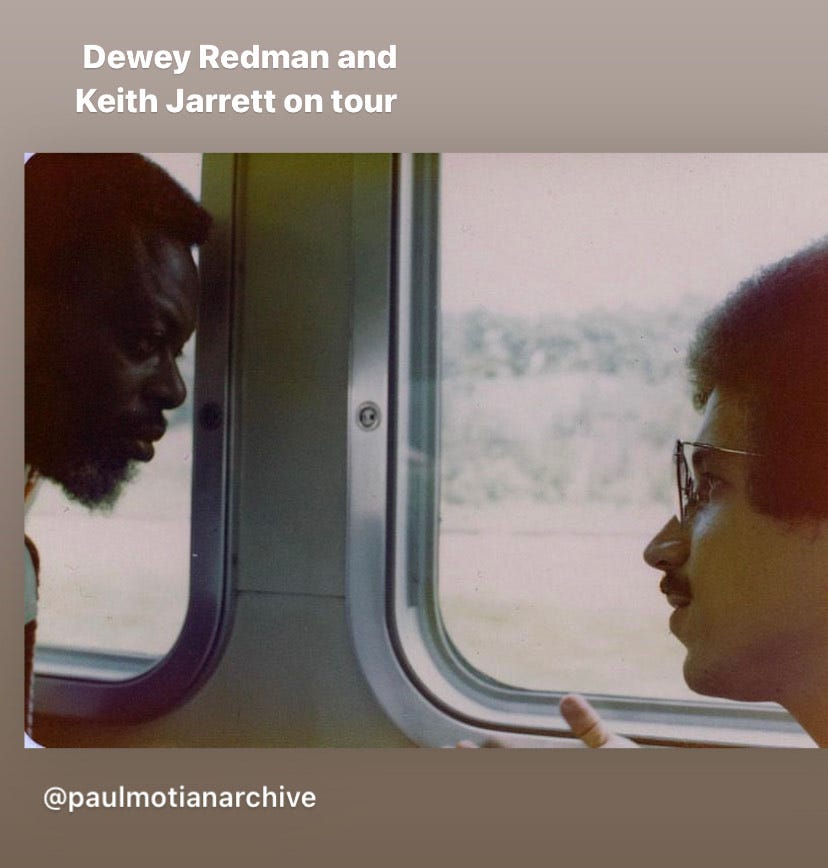
Keith's album "Survivors' Suite" is one of my favorite albums ever. Dewey told me he was strung out on that session and between each song had to go to the bathroom to be sick. ECM producer Manfred Eicher didn't know why Dewey was so sick; he thought Dewey just had a stomach ache, but Keith knew and he wasn't happy. In fact the American Quartet ended after that record, but what an incredible send-off. You can hear Dewey really playing some changes on "Survivors' Suite," complex ones. People have said Dewey wasn't a changes player, but that’s just not true. When I met Keith Jarrett at the Deerhead Inn, he told me he also didn't consider Dewey a changes player, but that one night Dewey literally channeled Coleman Hawkins through his horn and played the living daylights out of some changes, and everyone was just jaw to the floor. When Keith asked Dewey what happened, he said, "Don Byas died today and I felt his spirit."
Dewey told many stories. Like how when he first met John Coltrane, he awkwardly told him he had beautiful fingers and then felt embarrassed by his own question but how 'Trane was cool with it and remained calm. Or how, in Dewey's early days in NYC, he was nervous playing one his first gigs and after the set, a man approached him enthusiastically, asking, "Where you from, man?" Dewey replied, "Houston, Texas." The guy then bluntly remarked, "Well, you sound like shit, go back to Houston!"
Dewey recounted an incident from a European tour with Ornette Coleman, which also featured many other supergroups. During this tour, their band room happened to be next to Dexter Gordon's. Dewey observed the great alto player Sonny Stitt entering Dexter's room, presumably to share some saxophone fingering exercises, and decided to investigate. Up to that point, Dexter and Sonny had completely dismissed Ornette, considering him 'jive' and incapable of playing changes. However, while they were all engaged in conversation, they were startled by the sound of Charlie Parker emanating from Ornette's room. Rushing in, they discovered it was Ornette playing eerily like Bird. From that moment onward, Dexter and Sonny held a newfound respect for Ornette.
Dewey said he once asked Ornette if he could get the chord changes to a certain tune because it seemed it had specific changes. He handed Ornette the melody chart and Ornette took forever scribbling on it. When Ornette finally handed the chart back, he had written a different chord on every single note of the melody.
One Christmas, I went over to visit Dewey at around 9 am, and when I got to the door, he handed me a Cognac. "Happy Christmas, Barney," he said dryly. We chatted and ate fruit cake that his wife Lidja had made. I asked him about Paul Bley, and he told me, "well, Paul is very talented but he’s also very into Paul Bley." I had just met Keith Jarrett at the Deerhead Inn and was telling Dewey about it. Dewey said to Lidija, "give Barney some of those CDs of me with Keith," and Lidija gave me both box sets of the Keith Jarrett American quartet. I should have asked Dewey to sign them, but then again, what for? Everything eventually dissolves and renews itself as something else. I could feel the truth of transience emanating from Dewey. He was sage if I had ever met one.
Dewey helped change the face of improvised music alongside Ornette Coleman, Charlie Haden, Alice Coltrane, Don Cherry, the Art Ensemble of Chicago, and others who were part of the '60s new black music revolution. He was never recognized in the way he should have been, but he was a giant who helped create a movement.
Keith Jarrett knew what Dewey meant and that it connected Keith with this new "scenius" of the '60s. (Brian Eno's term "scenius" refers to the collective creativity and intelligence that arises from a collaborative cultural scene, rather than from isolated individuals.)
I’ve never heard anyone infuse their music with as much of their life as Dewey did—every solo felt deeply connected to his own story.
Keith's album "Survivors' Suite" is one of my favorite albums ever. Dewey told me he was strung out on that session and between each song had to go to the bathroom to be sick. ECM producer Manfred Eicher didn't know why Dewey was so sick; he thought Dewey just had a stomach ache, but Keith knew and he wasn't happy. In fact the American Quartet ended after that record, but what an incredible send-off. You can hear Dewey really playing some changes on "Survivors' Suite," complex ones. People have said Dewey wasn't a changes player, but that’s just not true. When I met Keith Jarrett at the Deerhead Inn, he told me he also didn't consider Dewey a changes player, but that one night Dewey literally channeled Coleman Hawkins through his horn and played the living daylights out of some changes, and everyone was just jaw to the floor. When Keith asked Dewey what happened, he said, "Don Byas died today and I felt his spirit."
Dewey told many stories. Like how when he first met John Coltrane, he awkwardly told him he had beautiful fingers and then felt embarrassed by his own question but how 'Trane was cool with it and remained calm. Or how, in Dewey's early days in NYC, he was nervous playing one his first gigs and after the set, a man approached him enthusiastically, asking, "Where you from, man?" Dewey replied, "Houston, Texas." The guy then bluntly remarked, "Well, you sound like shit, go back to Houston!"
Dewey recounted an incident from a European tour with Ornette Coleman, which also featured many other supergroups. During this tour, their band room happened to be next to Dexter Gordon's. Dewey observed the great alto player Sonny Stitt entering Dexter's room, presumably to share some saxophone fingering exercises, and decided to investigate. Up to that point, Dexter and Sonny had completely dismissed Ornette, considering him 'jive' and incapable of playing changes. However, while they were all engaged in conversation, they were startled by the sound of Charlie Parker emanating from Ornette's room. Rushing in, they discovered it was Ornette playing eerily like Bird. From that moment onward, Dexter and Sonny held a newfound respect for Ornette.
Dewey said he once asked Ornette if he could get the chord changes to a certain tune because it seemed it had specific changes. He handed Ornette the melody chart and Ornette took forever scribbling on it. When Ornette finally handed the chart back, he had written a different chord on every single note of the melody.
One Christmas, I went over to visit Dewey at around 9 am, and when I got to the door, he handed me a Cognac. "Happy Christmas, Barney," he said dryly. We chatted and ate fruit cake that his wife Lidja had made. I asked him about Paul Bley, and he told me, "well, Paul is very talented but he’s also very into Paul Bley." I had just met Keith Jarrett at the Deerhead Inn and was telling Dewey about it. Dewey said to Lidija, "give Barney some of those CDs of me with Keith," and Lidija gave me both box sets of the Keith Jarrett American quartet. I should have asked Dewey to sign them, but then again, what for? Everything eventually dissolves and renews itself as something else. I could feel the truth of transience emanating from Dewey. He was sage if I had ever met one.
He told me how pianist Kenny Kirkland was playing in his band one time and Dewey yelled out to him "stroll", meaning to stop playing and lay out. Kenny hilariously thought Dewey had yelled "stride", and started playing busy stride piano. Dewey laughed hard at that.
Some months later I was at Nice Jazz festival in France leaving the hotel in a van with The Groove Collective. Just then, Dewey comes running out of the hotel and up to the van yelling "Hey Barney, Barney". He had heard I was there and he wanted to say hi! I couldn't believe it. This was Dewey Redman. I felt so proud that day. Dewey was just a good human without airs and also happened to be one of the greatest and most innovative players ever.
The last time I saw the Griot Dewey was in a Swiss hotel foyerwhile touring with Josh Roseman. I'll never forget his white hair, his brilliant eyes, and his shining skin that day. A charismatic air was all around him and I somehow knew it would be the last time I saw him. I didn't admit this to myself until it became a reality. I was always intimidated by his history and his genius, but he also made me feel he was just a down-home friend. There was no prejudice, nothing inauthentic. I told him I was getting married, and he said, "man! you better send me an invitation, 'cause if you don't, I will never speak to you again"! I said I would, and I did.
After he died, Lidija told me he was sad he never received the invitation and that he really wanted to come. Perhaps the invitation got lost, or maybe he had other reasons. He was a complex person.
Here are some of the other Dewey-isms I wrote down: 'It's always all about the MUSIC'. It's not about the money. You must be dedicated to the music. When you're playing bop, play bop. When you're playing free, play it free. When you're playing bluesy, play bluesy.
"Music is unlike the other arts because you can't see it but you feel it as deeply as if you did see it". "People always ask me what I think about when I play..and my first answer is; I react".
"Music is never really free…because you are reacting, following things, sounds"
"Music will heal you," he told me.
"Man, Charlie Parker sounds better every day".’
___________
Live Archival Album from a week in Chicago Here:

I loved reading this; and will return to take it in further as there’s such richness in the insights you’ve shared.